
Estate Planning · Living Trusts · Anaheim, Orange County
Estate Planning Attorney in Anaheim, California
Living trusts, wills, and the trust transfer deed for the Anaheim home your family may have owned for decades — drafted by an Orange County attorney who puts Proposition 19 and your property tax basis on the table in the first conversation. Practicing in California since 2006. You'll know your exact cost before we begin. No billing surprises.
We Can Help You With:
- Revocable living trusts
- Wills and pour-over wills
- Trust transfer deeds, prepared and recorded
- Durable powers of attorney
- Advance health care directives
- Prop 19 review of pre-2021 trusts
Proudly Serving Anaheim and all of Orange County
across Google · Yelp & Avvo
Practicing Since 2006 — 20+ years in practice, California Bar #241562.
Know Your Cost Up Front — you'll know your exact cost before we begin. No billing surprises.
Talk to the Attorney Directly — you speak with Kurt, not an intake service.
Estate Planning for Anaheim Families With a Long-Held Home
Anaheim is one of the oldest cities in Orange County, and a great many Anaheim families are still living in the house a parent or a grandparent bought. Under Proposition 13, the taxable value of that home has barely moved since the year it was purchased, while the market around it has moved a great deal. That gap — a low assessed value sitting under a home worth far more — is quietly the most valuable and the most fragile thing in a lot of Anaheim estates.
Kurt D. Elkins has practiced law in California since 2006 (California Bar #241562) and focuses on estate planning and real estate law. For an Anaheim home carrying decades of Prop 13 history, that pairing matters: the plan and the deed that funds it are drafted at the same desk, by someone who reads title for a living.
What Proposition 19 Does to an Anaheim Family Home
Since 2021, Proposition 19 has largely closed the old parent-to-child exclusion. When a parent's home passes to a child, the county reassesses it to current market value, and only a limited exclusion survives — available only where the child makes that home their own principal residence and files the claim on time. A child who means to keep an Anaheim house as a rental, or to sell it a few years later, will generally see the property tax reset to what the home is worth today. On a house whose assessed value was set decades ago, that is not a rounding error. It is frequently the thing that forces the sale.
No living trust changes that arithmetic, and you should be careful of anyone who suggests otherwise. What planning can do is make the consequence visible while you can still act on it: work out which child actually intends to live in the Anaheim house, equalize the others with assets that are not the house, and make sure whoever keeps it has the liquidity to carry the new tax bill instead of listing the property to pay it. Those are decisions rather than documents, and they have to be made before the transfer, not after. Your current assessment and the exclusion claim forms sit with the Orange County Assessor.
If your trust was signed before 2021, it was almost certainly drafted around the older rules, and its assumptions about the Anaheim house may no longer hold. An amendment or a restatement is usually enough to bring it current. The Proposition 19 and property tax planning page goes through the rules in more depth.
Why an Anaheim Home Still Forces the Trust Decision
Set the tax question aside and the ownership question is still waiting. California's simplified small-estate procedures stop at $208,850 in gross value (Probate Code §13100), and a house held in a parent's own name is almost always what carries the estate past that line into full probate. Once there, attorney and executor compensation is set by statute (Probate Code §10810) and calculated on the gross value of the estate — what the home is worth today, not the modest figure on the tax bill, and with no deduction for the mortgage. The process is public and slow besides.
A revocable living trust is what a living trust attorney in Anaheim uses to step around all of that: your successor trustee administers the trust privately, on your written instructions, with no courtroom and no hearing calendar.
Where an Anaheim Estate Ends Up Without One
Anaheim has no probate court of its own. Every probate matter in the county is heard by the Orange County Superior Court, Probate Division, at the Central Justice Center, 700 Civic Center Drive West, Santa Ana, CA 92701. The practical consequence of an unfunded plan is not abstract: the family drives to Santa Ana, waits on that court's calendar, and the house sits in limbo while the tax bills keep arriving.
To be clear about scope: Kurt does not accept probate, trust administration, trustee, or beneficiary-dispute matters. Probate appears on this page only because it is the outcome a properly funded trust is built to avoid. If you want the mechanics, the guide to how probate works in Orange County walks through them.
The Deed Is What Actually Funds the Plan
A trust that never takes title to the Anaheim house protects nothing at all. Deeds for Anaheim property record with the Orange County Clerk-Recorder, and Kurt prepares the trust transfer deed and handles the recording as part of the plan rather than handing it back to you as homework.
Moving your own home into your own revocable living trust is generally not treated as a change in ownership for property tax purposes, because you keep the beneficial interest. Funding the trust therefore does not disturb the Prop 13 basis you have spent decades protecting — it simply keeps the house out of Santa Ana. Alongside the trust, the plan includes a pour-over will, durable powers of attorney, and advance health care directives, so that decisions during your life have an answer too.
Official Resources for Anaheim Residents
- CA Board of Equalization — Prop 19
The state's own explanation of how a parent-to-child transfer is reassessed, and what is excluded.
- OC Assessor
Your Anaheim home's assessed value, ownership record, and the exclusion claim forms.
- OC Clerk-Recorder
Where a trust transfer deed for an Anaheim property is officially recorded.
- OC Superior Court — Probate Division
The Santa Ana venue that hears every Orange County probate matter, with forms and calendars.
How an Anaheim Estate Plan Comes Together

Fifteen Minutes, and a Straight Answer
Tell Kurt what you own, how long the Anaheim house has been in the family, and who you want holding the keys afterwards. He'll say plainly whether you need a trust, a will, or nothing yet — and if it isn't work he handles, he'll point you toward someone who does. You'll know your exact cost before any work begins.
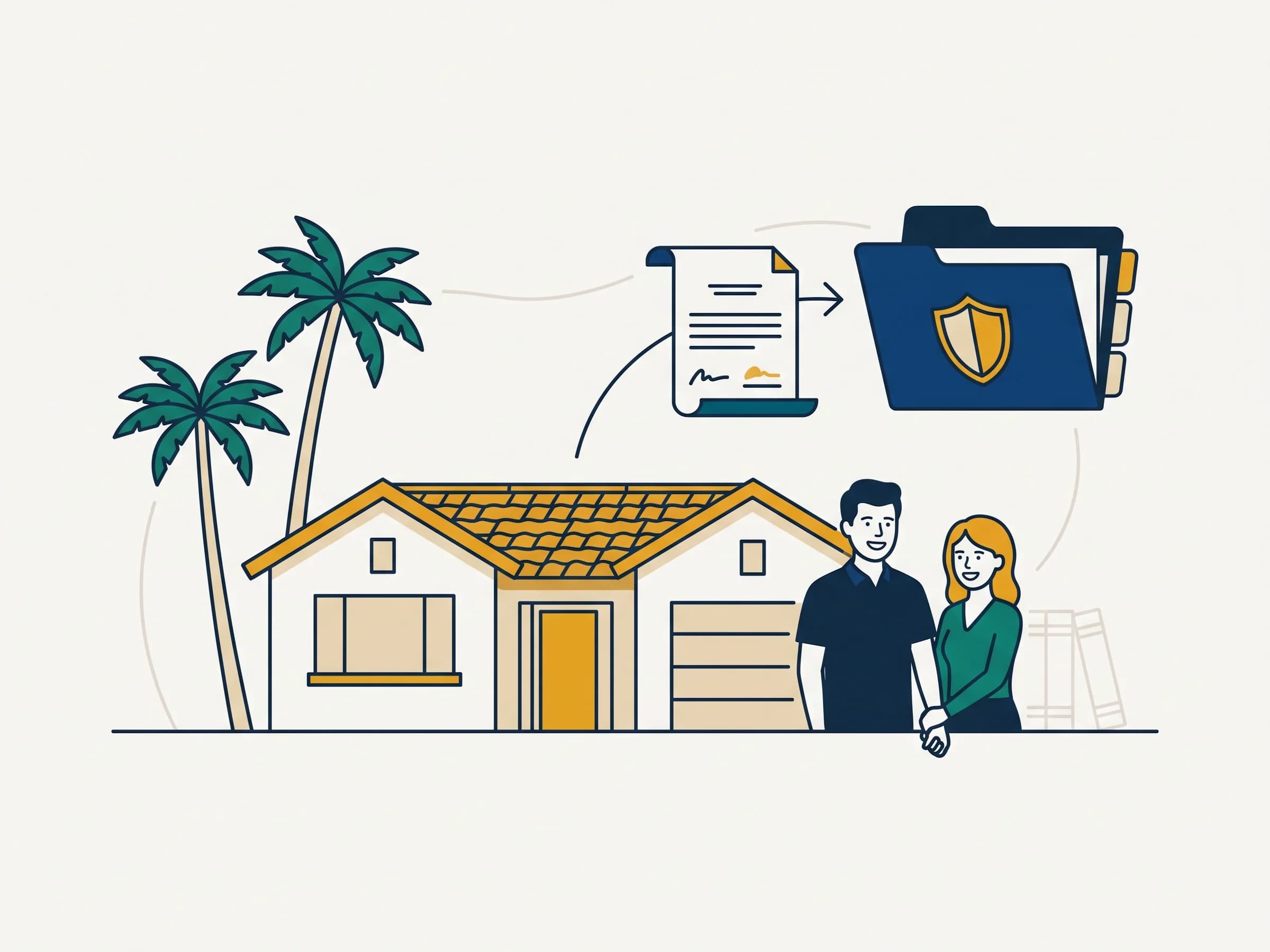
The Anaheim House, Actually Titled to the Trust
Funding is the step that fails most often, and an unfunded trust protects nothing. Because Kurt also practices real estate law, the trust transfer deed is drafted and recorded with the Orange County Clerk-Recorder in-house, and the recording is confirmed rather than assumed.
How a house moves into a trust
Who Keeps the House, and Who Gets Made Whole
One child wants to stay in the Anaheim home; the others want their share in cash. Because Prop 19 lands differently on each of them, the plan names a successor trustee, appoints guardians where children are still young, stages distributions for young adults, and says in writing how siblings are equalized — before anyone has to negotiate it in a week of grief.

Signing, Funding, and Keeping the Plan Current
Documents are executed properly, the deed is recorded, and you leave knowing which accounts to retitle and which beneficiary designations to update. Trusts signed before 2021 are also read back against Proposition 19 — an amendment or a restatement is usually all it takes to bring an older Anaheim plan in line with the law as it now stands.
Wills and trusts in Orange CountySave Kurt's Contact Card
Phone, email, and the Orange office address in one tap — so the number is already in your phone when the family sits down to talk about the Anaheim house.

Frequently Asked Questions
Will my children keep the Proposition 13 tax basis on our Anaheim home?
Usually not in full. Since 2021, Proposition 19 has narrowed the parent-to-child exclusion sharply: when the home passes to a child, the county reassesses it to current market value unless that child makes the property their own principal residence and files the claim on time, and even then only a limited portion of the value is excluded. For an Anaheim home whose assessed value was set decades ago, the difference between the old tax bill and the new one is large enough to plan around rather than discover. No living trust changes that rule. What a plan does is let you decide, while you can still decide, who keeps the house and how everyone else is made whole.
Does moving my Anaheim home into a living trust trigger a property tax reassessment?
No. Transferring your own home into your own revocable living trust is generally not treated as a change in ownership for property tax purposes, because you keep the beneficial interest in the property. Funding the trust is what keeps the Anaheim house out of probate, and it does not disturb the Proposition 13 assessed value you have been carrying. The reassessment question arises later, on the transfer to your children, which is the part worth planning for now.
My trust was signed before 2021. Does it still work for my Anaheim house?
It is almost certainly still a valid trust, but its assumptions may be out of date. Plans drafted before Proposition 19 took effect were generally built around the older and far broader parent-to-child exclusion, and some of them direct the Anaheim property in ways that no longer produce the result the family had in mind. A review takes far less time than the problem it prevents, and in most cases an amendment or a restatement is enough to bring an older plan current. Kurt will also tell you plainly if nothing needs changing.
Do I need a living trust if I own a home in Anaheim?
For most Anaheim homeowners, yes. California's simplified small-estate procedures stop at $208,850 in gross value under Probate Code section 13100, and a house held in your own name rather than in a trust is what most often carries an estate past that line into full probate. Statutory compensation under Probate Code section 10810 is then calculated on the gross value of the estate — what the home is worth today, not the low figure on your tax bill, and without subtracting the mortgage. A funded revocable living trust keeps the Anaheim house out of that process, and keeps the family's affairs private.
Where would an Anaheim estate be handled if there is no trust?
Anaheim has no probate court of its own. Every Orange County probate matter is heard by the Superior Court, Probate Division, at the Central Justice Center, 700 Civic Center Drive West, Santa Ana, CA 92701. That is the destination a funded living trust is built to avoid, and the house sits in limbo while the tax bills keep arriving. Kurt does not accept probate, trust administration, trustee, or beneficiary-dispute matters — his work is the plan that keeps a family out of that process to begin with.
What does an Anaheim estate plan cost, and where would we meet?
It depends on your family and your property, and you'll know your exact cost before we begin. No billing surprises. The office is at 2914 E Katella Ave, Ste 103, Orange, CA 92867, a short drive from Anaheim, and Kurt serves clients throughout Orange County. The 15-minute consultation is free and includes an honest answer about whether you need a lawyer at all. Call (714) 202-5552 and you talk to Kurt directly, not an intake service.
A Free 15-Minute Consultation — and an Honest Answer About Whether You Need a Lawyer at All
When you call, you talk to Kurt — not an intake service. He'll tell you plainly whether your situation needs an attorney, and if it isn't work he handles, he'll point you toward someone who does. If we do work together, you'll know your exact cost before we begin. No billing surprises.
“Although he was unable to handle my matter, he took time out of his day to educate me on the law and refer me to another attorney.”
“After contacting other attorneys charging very expensive rates, he offered to review the trust and answer my questions for no charge.”
Talk to an Anaheim Estate Planning Attorney
Book your free 15-minute consultation. Bring the questions about the house and the tax bill — you'll get a straight answer about what your family needs, and you'll know your exact cost before we begin.